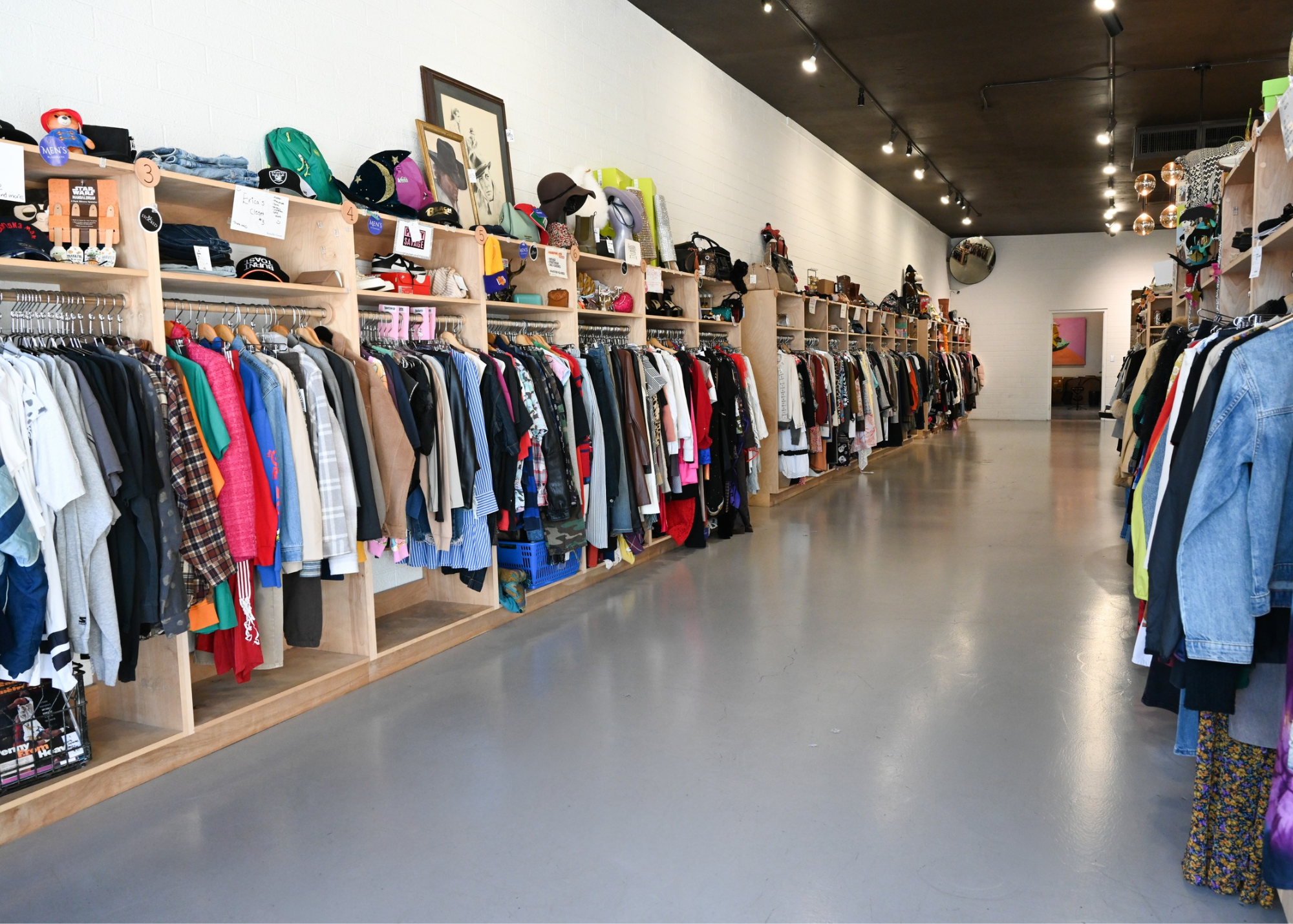
Own a million-dollar secondhand marketplace.
The full playbook behind Republic Goods in the Las Vegas Arts District: what I built, what it cost, and how it runs without me.
I invested about $75k to start the store, with an additional $40k held in my account for emergencies. I worked significantly more hours to get it up and running, and continue to feature myself on camera for social media. I’m sure there are many better ways to make money, especially if you’re risk-averse or don’t want to be on camera.
Did I pay myself back for investment within 7 months? Yes. Will you? I don’t know.
Today, the store has been open for almost 2 years, and it does over a million dollars in sales, which beats out most similar franchises. But the kicker is that I spend 1-4 hours a week working on it.
This playbook is everything I learned getting it there. Not generically, but specifically. What worked, what didn’t, and what I’d do if I started from scratch tomorrow.
Join the interest list for more info.
The honest numbers
Over $1M in sales a year.
About 3 months from idea to open doors.
Fully paid back 7 months after opening.
About 1 to 4 hours a week is what I spend on the store. I’m not on the schedule, and I never work a shift.
Who this is for, and who it isn’t
A good fit if:
You’ve already decided you want to open a secondhand or consignment marketplace, or you’re comparing franchises.
You like people, you like teaching, and you’re good at turning messy work into simple steps.
You can get access to around $100k. The Playbook shows my costs line by line so you can plan your own.
You want to build something that is yours, not a copy of mine.
Not a fit if:
You want me (or someone else) to build the business for you.
You want ongoing coaching or a support team.
You’re looking for a guaranteed income. These are my results, and I can’t speak for how you’ll do.
This is my playbook, not yours. It’s built from Las Vegas, so your rent, rules, and customers will differ. I’m not a lawyer or an accountant, and you’ll want both.
Why I’m sharing this
The world will be better with more entrepreneurs.
I can’t move fast enough. I want to make a real dent in how we shop and resell our clothes, so buying secondhand becomes the norm and clothes stay in use longer. There’s one of me. The only way to shift something that big is to put what I know in more people’s hands.
There should be more options than franchising or figuring it out alone. A franchise comes with real pros and cons, and I lay them out below. But for this model, I don’t think most people need to buy into one to figure it out. What if you paid once and ran the whole thing as 100% yours?
This business isn’t for everyone. And with all the info and every data point from my store in front of you, you can make that call with confidence.
Am I creating competitors? Maybe. I choose to believe there’s more than enough to go around, and every owner will add their own magic.
What’s inside
It’s written in the order you’d actually do the work, from the first decision to a store that doesn’t need you on the floor. Google Sheets templates come with it, including a startup cost sheet you copy and fill in with your own numbers for your own city.
This is the outline, but as often as possible I provide numbers, pictures, measurements, and real life stories (some are pretty crazy).
Part 1: Before you start
Is this for you? An honest check on your skills, your stomach for risk, and your bank account. If it’s a no, better to know now.
Name and brand. How to pick a name, handles, colors, and a voice that sounds like a person. My own branding is in there as an example. Copy the process, not the look.
Legal and accounting setup. Entity, EIN, bank account, and the bookkeeper setup that keeps tax season calm. Plus the order to do them in, and why the order matters.
What it cost me, line by line. My real startup costs, with a template to build yours.
Part 2: Building the store
Choosing a location. What to look for, lease red flags, and my strong opinions on where I would build next.
Space and layout. How many booths to aim for, how to plan dressing rooms and sizes, and the office changes I would make.
Booths and fixtures. Exactly what I built, the measurements, what it cost, how long it took, and what I would change.
The supply list. Everything to order, from hangers to security tags, with links.
Part 3: Filling booths and driving traffic pre-opening
Website and booking. How sellers reserve booths and pay online, and the terms they agree to.
Social media. How to start building an audience before the doors open.
Selling out your booths. How I filled the store before opening day, and the numbers I tracked daily.
Grand opening. Why this is a non-negotiable. What I did and what I would do again.
Part 4: Systems and people
Hiring and staffing. Roles, pay, the job descriptions I use, and what your manager can decide without calling you.
Manager responsibilities. What your manager owns every week, and what I have them track.
The employee handbook. The policies I use for attendance, breaks, safety, and discipline.
Opening and closing duties. The daily checklists and handoff notes that keep every shift the same.
Employee benefits and perks. What I do to keep the best employees.
Training new staff. What someone needs to know before they work a shift alone or get keys to the store.
Seller terms and payouts. The terms sellers agree to, and how and when they get paid.
Top seller program. How I reward my best sellers, and why it lifts the whole store.
Measuring your booths. How to spot a slow booth, what to do about it, and how to (nicely) pack them up for now.
Automation and tools. The tech stack I use and what it costs. I’ve switched tools a few times, so you get to learn from my detours. Literally the name and number of the person I call to help me out.
Part 5: Running it
How the store works, week to week. Booking, setup day, the selling week, pickup, and payouts.
Hours, signage, discounts, and restocking. The small rules that keep a busy floor calm.
Seller reporting. How sellers see their sales every day without downloading an app.
Selling online. Why I favor some platforms over others and my actual results.
What you don’t get
None of my time. No coaching hours come with the Playbook. It’s the Playbook and the templates, nothing else.
No ongoing support. After you have it, you’re running your own business.
No franchise. No royalties, no territory, no required purchases, and no rules about how you run things.
No income promises. I’ll show you what worked for me. I can’t promise it for you.
No Legal/Financial/Tax advice. The employee handbook and any agreements are my starting points, not legal advice. Have your own attorney review them before you use them. Every state has different laws.
If you have read the Playbook and have a very specific question, you can book a paid call with me. Read it first. I understand each scenario is different, and I’m happy to answer very specific questions.
What it costs
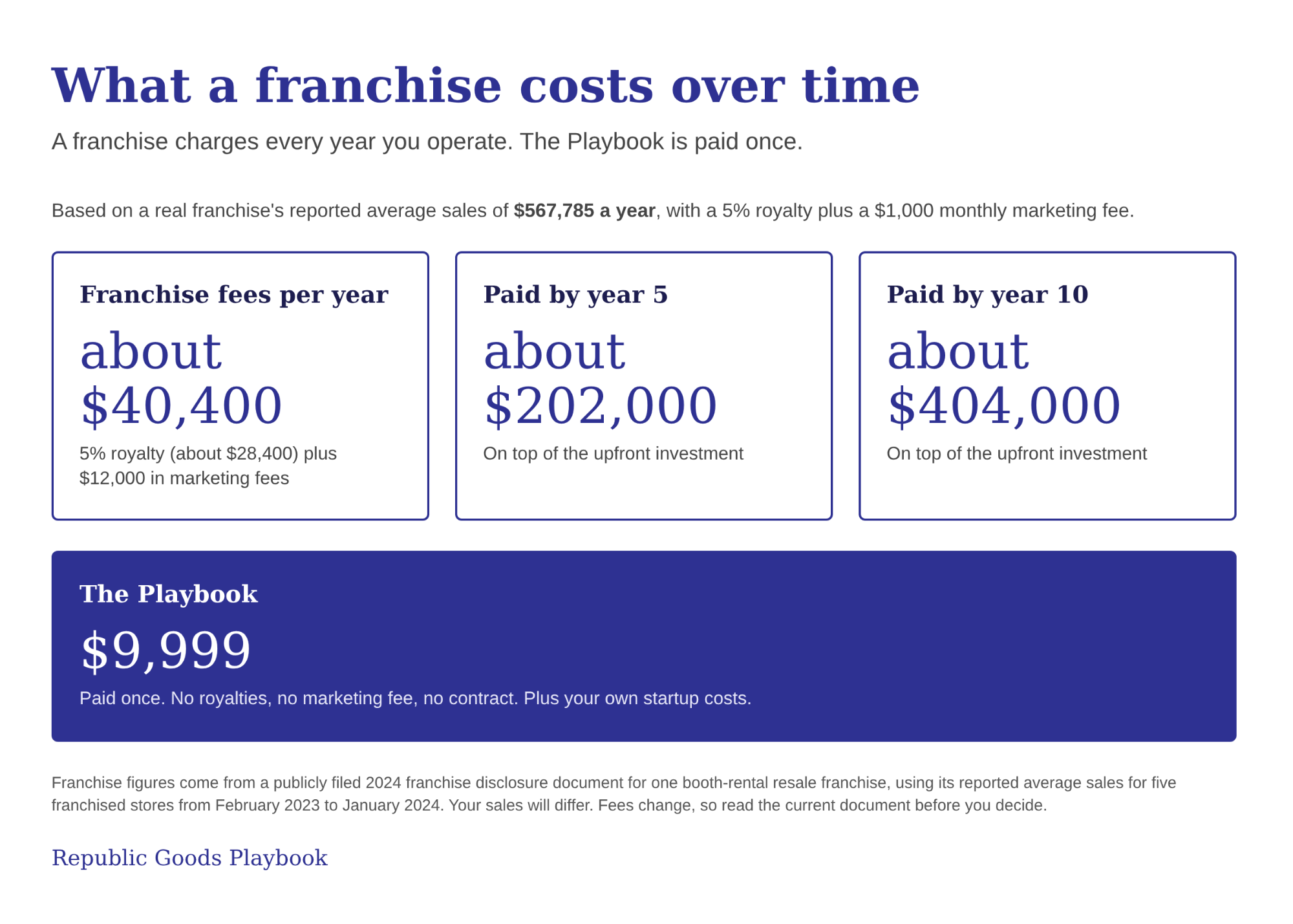
The Playbook is $9,999, paid once.
Here’s the math I’d do. A franchise can run well into six figures to start, then takes a cut of your sales every year and tells you what to sell and how. The other road is figuring it out yourself, which is how I did it. That meant expensive mistakes and a lot of trial by fire.
The Playbook costs a fraction of a franchise, with no royalties and no rules. It’s meant to save you the mistakes I already made.
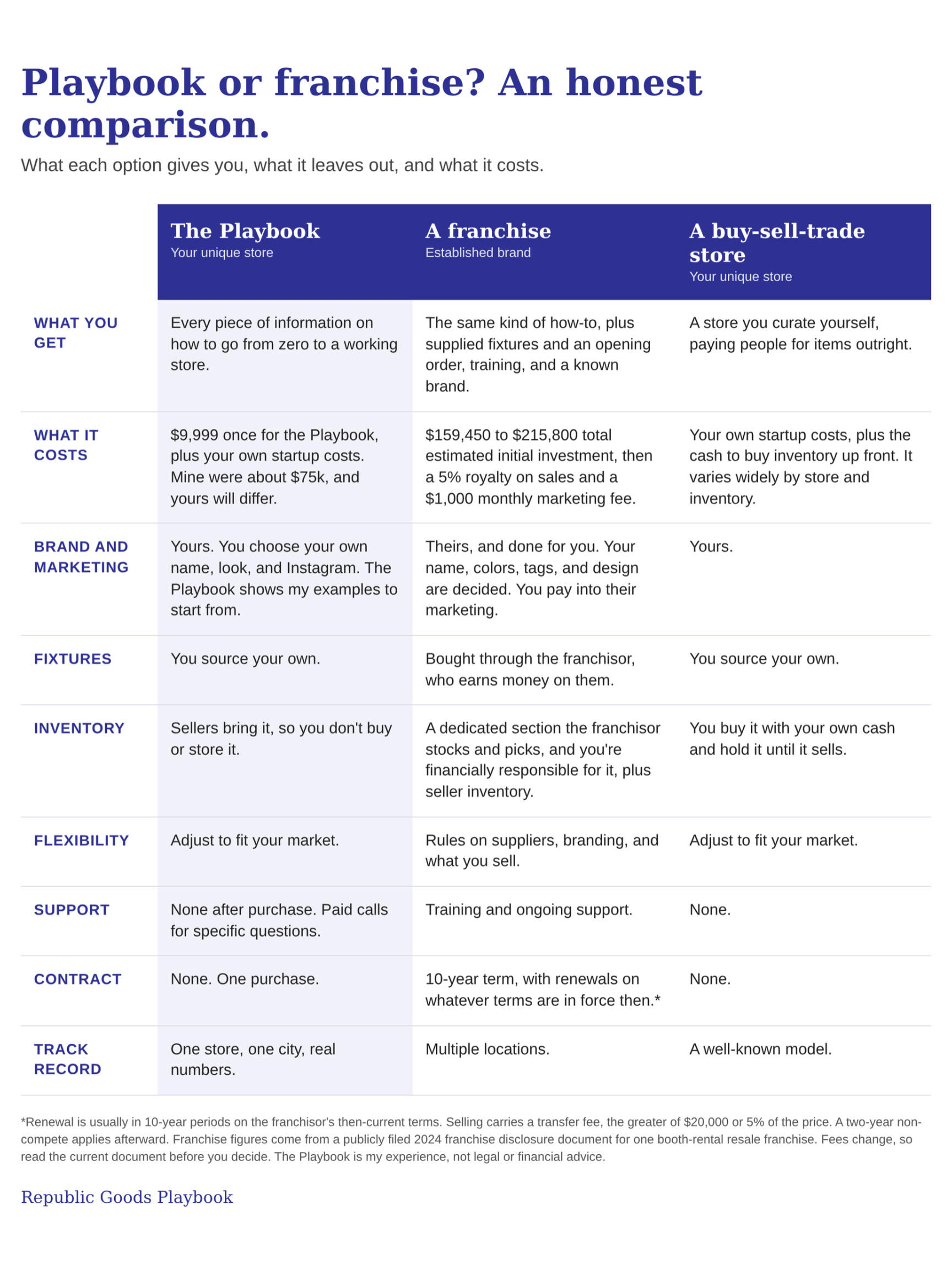
Three ways to open a secondhand store
The Playbook
Pros: $9,999 once, no royalties, no rules on what you sell, and you keep your own brand.
Cons: No coaching, no ongoing support, no built-in brand or marketing, and you build everything yourself.
2. A franchise
Pros: A known brand, a support team, and a proven system.
Cons: $159,450 to $215,800 to start, a 5% royalty plus $1,000 a month for marketing, a 10-year contract, a transfer fee, and a two-year non-compete.
3. A buy-sell-trade store
Pros: You control the inventory and keep the full margin.
Cons: You buy and price every item, so the inventory risk is yours, and it takes more daily hands-on work.
Franchise numbers come from a 2024 franchise disclosure document. Have your own attorney review any contract before you sign.
Pros and cons at a glance
My model: a booth-rental marketplace (the Playbook)
Pro: Sellers bring the inventory, so you don't buy it, store it, or watch it lose value.
Pro: The store looks different every week because sellers rotate their booths.
Pro: No royalties, no contract, and no rules about your name, look, or suppliers.
Pro: Costs less to start than a franchise. Mine were about $75k, and yours will differ.
Con: You build everything yourself: the name, the brand, the booths, the systems, and the team.
Con: It's a two-sided marketplace. You need sellers and shoppers at the same time, starting from zero. My booths weren't booked more than a week out at first.
Con: You earn a share of sales, not the full sale price.
Con: No support after you buy it, except paid calls.
Con: One store in one city is my track record, so your results will differ.
A franchise
Pro: The brand is done for you. Your name, colors, tags, and design are decided and every process is laid out.
Pro: Supplied fixtures, an opening order, training, and a team to call.
Pro: A track record across multiple locations.
Con: $159,450 to $215,800 total estimated initial investment
Con: A 5% royalty on sales plus a $1,000 monthly marketing fee, every year you operate.
Con: A 10-year term, a lease on top of it, and a two-year non-compete after you leave.
Con: Less flexibility. Rules on suppliers, branding, and what you sell, plus a required section the franchisor stocks and picks.
A buy-sell-trade store
Pro: Total control over what you sell and how it looks.
Pro: You keep the full sale price instead of a share.
Pro: A well-known model, and a great fit if you have a strong point of view on fashion.
Con: You pay cash for inventory and hold it until it sells.
Con: You're responsible for trends, and it can take a long time to learn what your customers like.
Con: You need to find others who have the same eye as you if you don't want to be the only buyer, and you will need to be comfortable telling people no or offering them less than they wanted.
Franchise figures come from a publicly filed 2024 franchise disclosure document for one booth-rental resale franchise. Fees change, so read the current document before you decide.